ENTRYWAY & STEPS
Custom Steps & Entryways — Built Safe, Built Right, Built to Last | North Shore Illinois
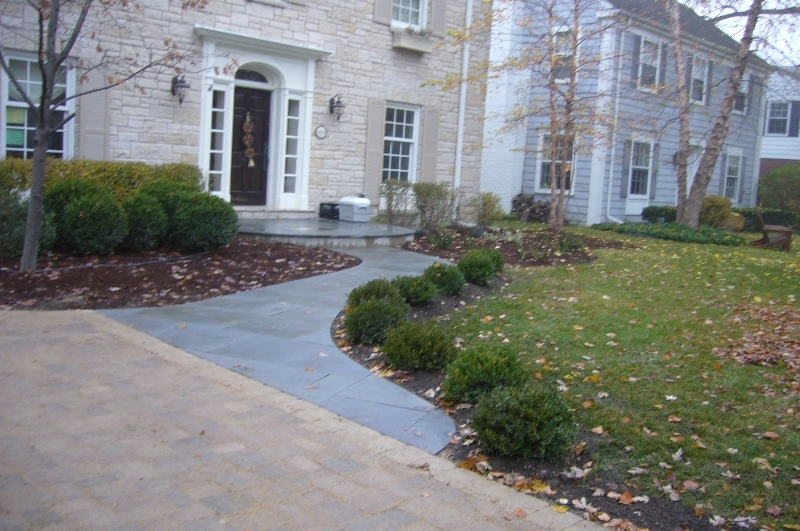
Your front entry steps are the first hardscape element every visitor touches — and they need to be safe, properly proportioned, and built to withstand decades of Illinois weather without shifting, cracking, or settling. At National Brick Paver & Stone we design and install custom steps and entryways across the North Shore of Illinois, and we approach every step project with the same standard: correct proportions, proper structural base, mortar set finish materials, and a design that flows seamlessly with the surrounding hardscape and architecture of the home.
Why most steps fail — and why ours don't:
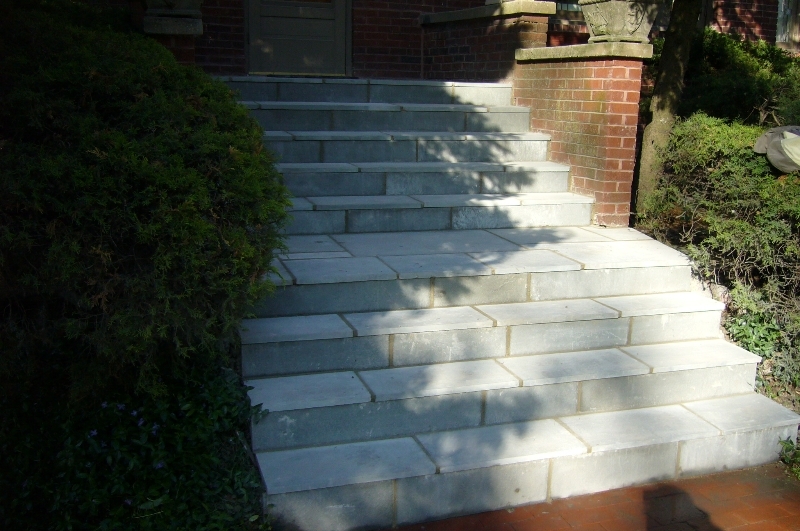
The two most common problems we encounter with existing steps are wrong dimensions and wrong construction method. Tread depth — the horizontal surface you step on — should be a minimum of 12 inches and ideally 14 inches for comfortable, natural stride. Riser height — the vertical face between treads — should be between 6 and 7.5 inches for safe, code-compliant steps. Steps with shallow treads and tall risers are uncomfortable, awkward, and genuinely dangerous — especially in winter conditions.
We have rebuilt dozens of step installations across the North Shore where the original contractor built treads as shallow as 6 inches and risers as tall as 10 inches. Correcting these dimensions requires lifting and releveling the adjacent patio or landing, rebuilding the structural base, and resetting every tread — which is exactly what we do, and exactly the kind of detail-driven work that defines every National Brick Paver & Stone project.
Our steps are built in two stages for permanent performance:
First, we form and pour a structural concrete base — sized and shaped precisely to the final step dimensions. Concrete provides the structural foundation that prevents settling, shifting, and movement through Illinois freeze-thaw cycles. No amount of finish material will save steps built on an inadequate base.
Second, we apply the finish material — set in mortar with fully mortared joints. Dry-set stone or brick on steps is not acceptable in our climate. Mortar locks every piece of finish material permanently to the structural base, prevents water infiltration into joints, and eliminates the movement and separation that causes dry-set steps to become a safety hazard within a few seasons.
Finish materials we install for steps:
Thermal bluestone veneer is our most popular step finish — a smooth-textured natural stone surface that is refined, elegant, and provides excellent traction in wet and icy conditions. Every piece is custom cut to the exact tread and riser dimensions of the project.
Unilock Ledgestone veneer delivers a stacked stone aesthetic with the engineered consistency and color stability of a premium manufactured product — a popular choice for steps that need to match an existing Unilock patio or wall system.
Full brick steps built from clay or concrete pavers provide a classic, traditional look that complements brick homes and traditional architecture throughout the North Shore.
Natural stone steps in bluestone, granite, and flagstone are available for full slab tread installations — delivering the most natural and refined look available in hardscape design.
Every step installation we complete is also graded and detailed for drainage — water sheds away from the structure, away from the foundation, and away from the walking surface so ice does not accumulate on treads in winter.
Frequently Asked Questions:
What is the correct tread depth and riser height for outdoor steps?
The ideal outdoor step has a tread depth of 12 to 14 inches and a riser height of 6 to 7.5 inches. These proportions create a natural, comfortable stride and meet standard building guidelines. Steps outside these ranges feel awkward and can be genuinely dangerous especially in winter.
Why do steps crack and shift in Illinois?
The most common cause is an inadequate structural base combined with dry-set finish materials. Water infiltrates joints, freezes, expands, and forces materials apart. Mortar-set finish materials on a poured concrete base eliminate this failure mode entirely.
Can existing steps be repaired or do they need to be replaced?
It depends on the condition of the structural base. If the base is sound and the dimensions are correct, tread and riser materials can sometimes be removed and reset in mortar. If the base has failed or the dimensions are wrong, full reconstruction is the right